Common Mistakes to Avoid When Installing Polycarbonate Roofing
Polycarbonate roofing is widely used for patios, pergolas, carports, greenhouses, and outdoor living areas because it is lightweight, durable, and allows natural light to pass through. However, even though it is considered DIY-friendly, improper installation can lead to leaks, warping, reduced lifespan, and costly repairs.
This guide explains the most common mistakes to avoid when installing polycarbonate roofing and how to ensure your project is durable, weather-resistant, and professionally finished.
Why Proper Installation of Polycarbonate Roofing Matters
Polycarbonate sheets are engineered to expand, contract, and withstand UV exposure, wind, and rain. However, their performance depends heavily on correct installation techniques.
The Risks of Poor Installation
Water leakage and condensation buildup
Cracked or warped panels
Reduced UV protection
Poor thermal performance
Shortened roof lifespan
Avoiding installation mistakes ensures your roofing system remains strong, weatherproof, and visually appealing for years.
Mistake 1: Incorrect Sheet Orientation
One of the most common errors is installing polycarbonate sheets the wrong way around.
UV-Protected Side Facing Incorrect Direction
Polycarbonate sheets have a UV-protected layer that must face outward toward the sun. Installing it incorrectly exposes the material to UV damage, leading to yellowing and brittleness.
How to Avoid This Mistake
Always check manufacturer markings on the protective film before installation. Most sheets clearly indicate the UV-protected side.
Mistake 2: Not Allowing for Thermal Expansion
Polycarbonate expands and contracts with temperature changes. Failing to account for this movement leads to buckling and stress cracks.
Overtightening Screws
Tightening fixings too much restricts natural movement and causes the sheets to crack over time.
No Expansion Gaps
Ignoring expansion gaps between sheets leads to pressure build-up during hot weather.
How to Avoid This Mistake
Leave 3–5mm expansion gaps between sheets
Use screws with rubber washers
Tighten screws just enough to secure without compressing the sheet
Mistake 3: Poor Frame Preparation
A weak or uneven frame is one of the biggest causes of installation failure.
Uneven Support Structure
If the frame is not level, water can pool on the surface, leading to leaks and long-term damage.
Incorrect Spacing Between Supports
Too much spacing causes sagging, especially under heavy rain or snow loads.
How to Avoid This Mistake
Ensure your support structure:
Is level and stable
Has correct rafter spacing (usually 700–1000mm)
Is free from sharp edges or protrusions
Mistake 4: Improper Sealing of Sheet Edges
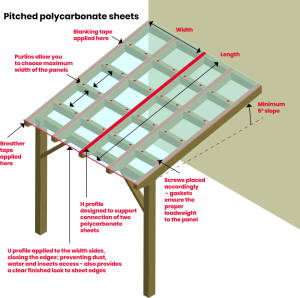
Edge sealing is essential to prevent dust, insects, and moisture from entering the hollow channels of multiwall polycarbonate sheets.
Using the Wrong Tape
Using non-breathable tape at both ends traps moisture, leading to condensation and algae growth.
Skipping End Caps
Without proper caps, the roof edges remain exposed to weather and debris.
How to Avoid This Mistake
Use anti-dust tape on top edges
Use vented tape on bottom edges
Install aluminium end caps for protection
Mistake 5: Incorrect Fastening Techniques
How you secure the sheets plays a major role in roof durability.
Overtightening Screws
This is a common issue that causes stress fractures and reduces sheet flexibility.
Using the Wrong Screws
Standard screws without rubber washers can lead to leaks and surface damage.
How to Avoid This Mistake
Use screws designed for polycarbonate roofing
Always include rubber sealing washers
Avoid excessive tightening pressure
Mistake 6: Poor Sheet Cutting Practices
Cutting polycarbonate incorrectly can permanently damage the material.
Cracking or Chipping Edges
Using blunt tools or incorrect saw blades can cause rough edges and structural weakness.
Removing Protective Film Too Early
This increases the risk of scratches and surface damage during installation.
How to Avoid This Mistake
Use a fine-tooth circular saw or jigsaw
Keep protective film on during cutting
Secure sheets firmly before cutting
Mistake 7: Ignoring Roof Pitch Requirements
A flat or poorly angled roof leads to drainage issues.
Water Pooling
Without proper slope, water collects on the surface, increasing stress on the panels.
Debris Build-Up
Leaves and dirt accumulate more easily on flat surfaces, causing long-term maintenance issues.
How to Avoid This Mistake
Ensure a minimum roof pitch of 5–10 degrees
Increase slope in heavy rainfall areas
Verify angle before installation begins
Mistake 8: Incorrect Overlapping of Sheets
When using corrugated or multi-sheet systems, overlap is critical for waterproofing.
Insufficient Overlap
Too little overlap allows rainwater to seep through joints.
Misaligned Sheets
Poor alignment affects both appearance and structural performance.
How to Avoid This Mistake
Follow manufacturer overlap guidelines
Use consistent spacing and alignment
Double-check positioning before fixing permanently
Mistake 9: Skipping Flashing and Edge Protection
Flashing and edging are often overlooked but are essential for long-term durability.
Water Leakage at Wall Connections
Without flashing, rainwater can enter where the roof meets a wall.
Wind Damage at Roof Edges
Exposed edges are vulnerable to uplift in strong winds.
How to Avoid This Mistake
Install proper wall flashing
Use edge trims for reinforcement
Seal joints with appropriate silicone where needed
Mistake 10: Poor Maintenance After Installation
Installation is only the first step—maintenance ensures long-term performance.
Neglecting Regular Cleaning
Dirt buildup reduces light transmission and roof appearance.
Ignoring Small Repairs
Minor cracks or loose screws can quickly develop into major structural issues.
How to Avoid This Mistake
Clean every 3–6 months using mild soap and water
Inspect after storms or heavy weather
Replace damaged fixings promptly
Conclusion: Achieving a Long-Lasting Polycarbonate Roof
Installing a polycarbonate roof successfully requires more than just placing sheets onto a frame. It demands careful attention to detail, correct tools, and an understanding of how the material behaves under different weather conditions.
By avoiding these common mistakes when installing polycarbonate roofing, you can ensure a strong, weather-resistant, and visually appealing structure that lasts for many years. Proper installation not only improves performance but also protects your investment and reduces long-term maintenance costs.
A well-installed polycarbonate roof delivers durability, energy efficiency, and modern design appeal—making it one of the best roofing solutions for residential and commercial outdoor spaces.